Bintu Tiamiyu, M.S., CCC-SLP

I design clearer paths to communication and learning.

Words shape what we notice, what we expect, and the opportunities we build. I use more than a decade in speech-language pathology and education to uncover barriers and design support that makes meaningful participation possible in real life.

Clinical EducatorSpeech-Language PathologistCurriculum + Learning Specialist
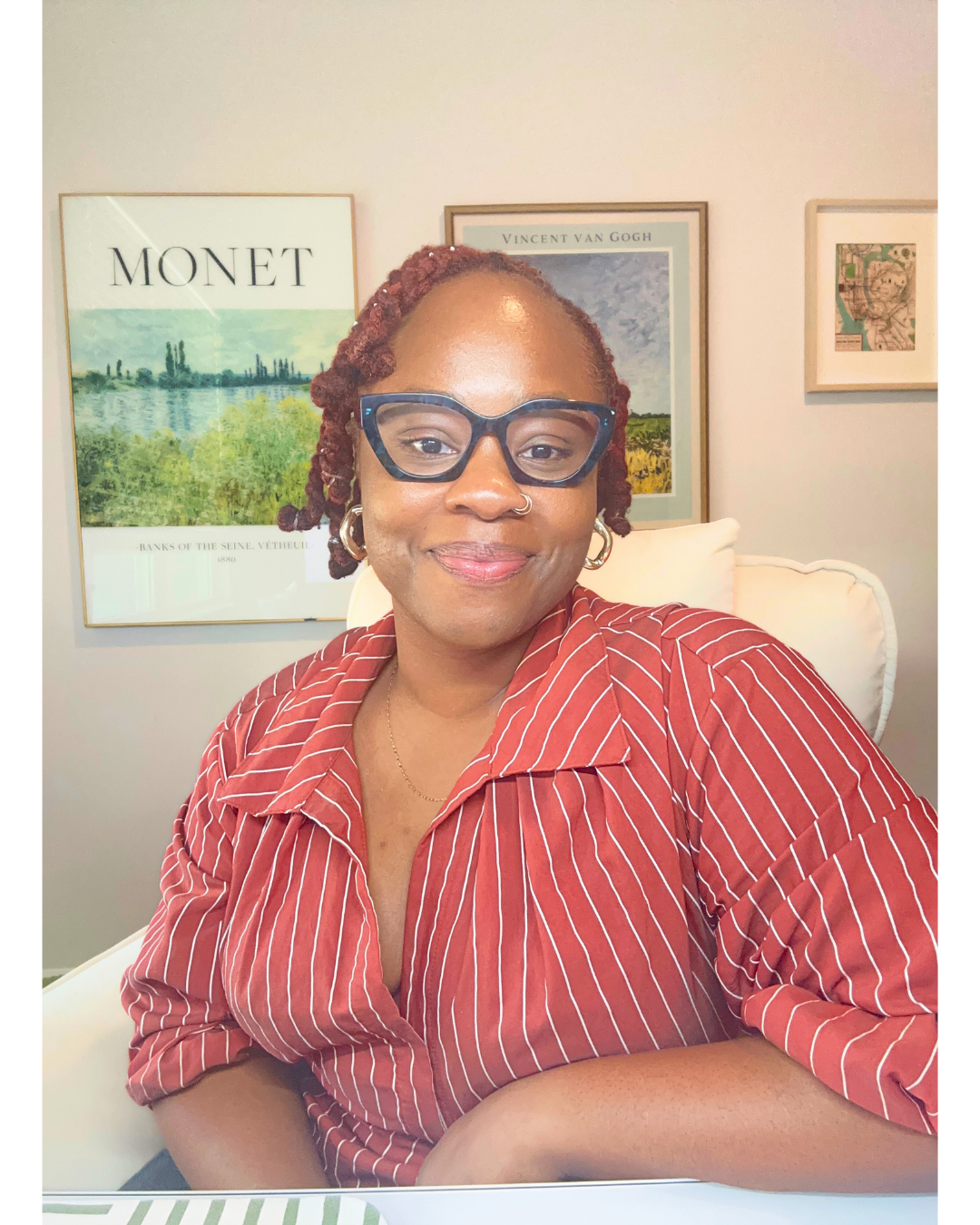
Bintu Tiamiyu seated in her creative studio© BINTU TIAMIYU
The throughline
Language shapes access, connection, and identity. My work begins there.
My approach

I examine what a task asks someone to understand, organize, and do—then design support that makes the work easier to enter and complete.

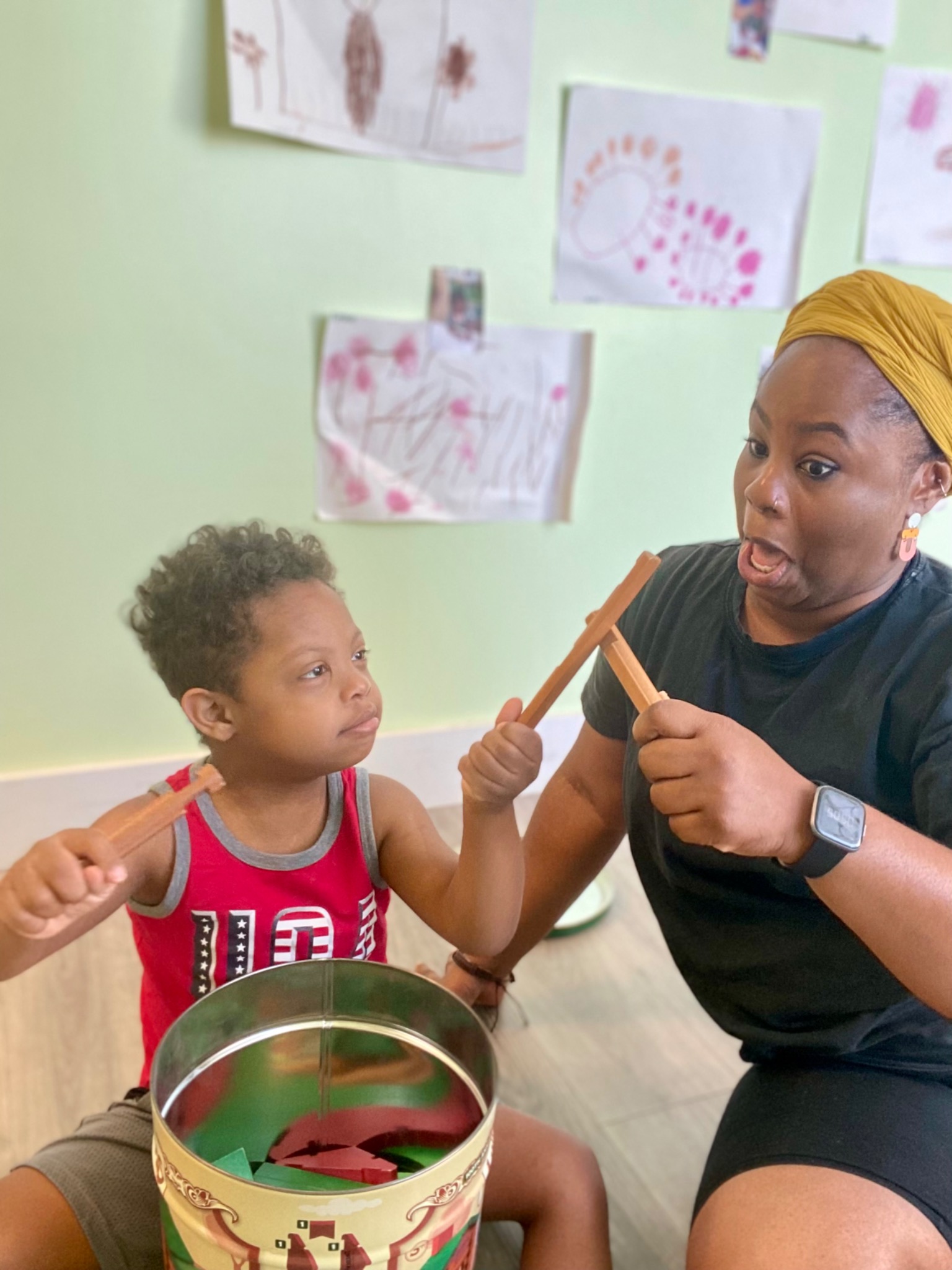
Bintu Tiamiyu beside expressive artwork© BINTU TIAMIYU
How I got here

I love language.

My mom, Linda, was an educator and a true creative. She saw my love of writing and gave me the tools to “live” in language. She sent me to writing workshops and challenged me to enter poetry slams in high school. I became fascinated by word choice—how one word could change what someone saw, felt, or understood.

My love of language lives in my work as a speech-language pathologist. For more than a decade in the classroom, I’ve worked alongside learners with complex communication needs, attending to the many ways they express ideas and build understanding—even when those ways go unrecognized.

I started by designing session activities around how individual learners make meaning. Now I design for the classroom, connecting what a learner needs with what the curriculum asks them to do. My knowledge of child and language development and neurodiversity-affirming practice helps me make those pathways visible.

Education, language, accessibility, and design meet here for me. How do we make learning easier to enter? How do we make room for different ways of communicating, processing, and participating? How do we ask better questions before deciding what someone can do?

I plan to keep asking those questions, answering them through design, and evolving my work to meet the diversity and growth of all learners.

One purpose · Two paths

SORO is where language, learning, and real life meet.

Both paths begin in the same place: understand the person, uncover the barrier, and create a path they can actually use.

Knowing the goal and the learner.

Years in the classroom have taught me to look at both the academic expectations and the learner’s experience of the task. I connect those demands with the learner’s interests, communication, and everyday life to design a clearer path into the work—without taking away the thinking.

A young learner choosing picture cards during a floor activity
Bintu responding to a child during a hands-on therapy activity
What makes my work different

I design while paying attention.

I am not interested in forcing a learner through a system that is not working. I watch what happens in real time, identify the hidden demand, and adjust the path while protecting the learner’s dignity and ownership.

More than standard careClinical judgment that looks beyond compliance.
Real-time pathwaysSupport changes when the learner shows us it should.
Personalized, not smallerAccess to rigor, not reduced expectations.
Selected work · 01
Learning design / Fifth-grade mathematics

From directions to independence.

A fifth-grade volume project became a chance to design for planning, critical thinking, and a learner’s growing ownership of the work.

The volume project

Make the thinking visible.

One hands-on build. Several rectangular prisms. A path from “what do I do?” to measuring, calculating, constructing, and checking.

The assignment asked for a finished object. The design challenge was helping a learner manage everything it took to get there.

My design work: break the task into usable stages, make checks visible, connect the calculations to the physical build, and leave the reasoning with the learner.
The design response

What the school gave us. What I built from it.

The school’s brief set the goal: make an animal from boxes and calculate its volume. I turned that brief into a learner-facing path with a plan, measurement record, staged build, and final checks.

Cleaned scan of the original fifth-grade volume-project assignment
01 / Starting pointA cleaned scan of the school’s original assignment. View the unedited photograph ↗
Page 1 of the redesigned learner guide, with a four-day planPage 2, planning the animal and materialsPage 3, measuring and calculating the volume of each partPage 4, building, explaining, and self-checking
02 / Designed supportFour learner-facing pages for planning, sketching, measuring, and explaining, with an educator-facing design overview in the complete guide.View the complete guide ↗
Finished student artifact

A dinosaur built from rectangular prisms.

The completed green cardboard dinosaur brought the math into the room. The fifth-grade learner measured its component shapes and attached L × W × H calculations to the build. Across the project, the learner developed a thorough understanding of volume and applied it to each part of the finished build. The staged process supported independent starts, sustained work, and self-checking.

The project was completed across multiple work periods, with supports designed to reduce overwhelm while keeping the mathematical demand intact.

Selected work · 02
Professional learning / Virtual education

Supporting sensory differences in the virtual classroom.

An interactive experience that helps educators reconsider assumptions about engagement and choose practical ways to increase access.

Interactive module · K–12 educators · Genially

What might the learner need?

When a student turns off a camera, looks away, or moves during a virtual lesson, the behavior is visible. The reason behind it may not be. Sensory and participation demands can shape how a learner engages with instruction.

The learning goal

Help educators notice possible barriers, pause before labeling behavior as disengagement, and choose flexible responses they can use in their next lesson.

My design approach

I organized the experience around recognizable classroom moments, short explorations of sensory demands, and scenarios that ask educators to make a decision. The central question keeps the focus on access: What might the learner need to participate?

Regulation supports access.

Open the interactive experience in a new tab ↗

About Bintu

Clinical depth. Educator’s eye. Designer’s mind.

I’ve spent more than a decade as a speech-language pathologist working with students, families, and educators. I pay close attention to the gap between what a task asks for and what a learner needs to get started. My curriculum and learning design work begins with each student’s learning profile: how they communicate, process, and participate. I consider the expectations and demands of the learning environment, then design experiences that honor neurodiversity and differences across learners.

Master of Science in Speech-Language PathologyMGH Institute of Health Professions
Certificate of Clinical Competence in Speech-Language PathologyNational certification from the American Speech-Language-Hearing Association
Developmental, Individual-differences, Relationship-based practitionerDIR/Floortime® Basic and Proficient training
Natural Language Acquisition trainedSupport for gestalt language processors
Augmentative and Alternative CommunicationAssessment, implementation, and team coaching
ASHA Award for Continuing EducationRecognition for sustained professional learning

Start with the person. Then build the path.